

Blog
Grid Congestion: Europe’s New Energy Challenge and How DSOs Can Turn the Tide
Europe’s rapid growth in wind and solar is accelerating the shift to a decentralized, renewable-powered energy system. But as more distributed energy resources (DERs), electric vehicles, and electrified demand connect to the grid, utilities are facing a growing challenge: grid congestion.
Grid congestion occurs when networks do not have the capacity to move electricity where and when it is needed. The result is a system built to accommodate more renewables, yet still lacking the flexibility to move that energy efficiently across the grid.
In some cases, operators must curtail renewable generation to maintain reliability, leading to higher costs and slower progress toward decarbonization. At the same time, congestion is not only limiting renewable export, it is also delaying new demand with businesses, housing developments, EV charging, and electrification projects facing long wait times for grid connections and upgrades, sometimes up to 10 years.
According to Energy Industry Review, congestion is now one of Europe’s most pressing energy challenges, where constraints are slowing electrification, renewable integration, affordability, and security of supply. For businesses waiting for connections or capacity upgrades in 2025, this creates significant economic consequences, year after year.
“Congestion is increasingly a visibility and coordination challenge,” said Gavin Farrand, VP of Sales for UK and Europe. “DSOs need real-time insight to actively manage demand, reduce bottlenecks, and make better use of the capacity they already have.”
For distribution system operators (DSOs), the issue is not just how much electricity is produced, but when and where it is generated and consumed. Solar may peak during the day, while EV charging, heat pumps, and residential demand often rise in the evening, creating localized bottlenecks even when overall supply is sufficient.
This is where AMI and smart grid communications play a critical role. Beyond billing and outage management, AMI now provides the intelligence layer needed to understand demand at a granular level, identify constraints, enable flexible tariffs, support demand response, and coordinate grid-edge resources.
At Trilliant, we provide AMI and smart grid platforms that give DSOs real-time insight into network conditions, demand patterns, and distributed assets. This enables utilities to optimize energy flows and integrate DERs more effectively.
As Europe continues to electrify transport, heating, and industry, grid expansion will remain essential, but it will not be fast enough on its own. Permitting, materials, labor, and investment cycles mean physical upgrades can take years. In parallel, DSOs need digital tools to make better use of existing infrastructure.
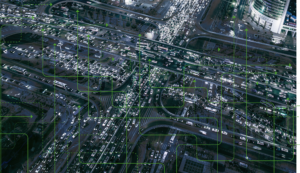
Grid congestion is often compared to a traffic jam. When too many vehicles use the same road, the solution is not only to build more lanes, but to improve routing, timing, and visibility. The same applies to the grid: smarter systems can shift demand, manage peaks, and unlock available capacity.
For DSOs, the path forward is clear:
- Improve visibility: Access granular, near-real-time data across the network
- Enable flexibility: Support demand response and flexible connections
- Integrate DERs intelligently: Coordinate solar, wind, storage, EVs, and flexible loads
- Strengthen resilience: Ensure reliable service while supporting growth and electrification
In the end, addressing grid congestion is about more than infrastructure. It is about resilience, efficiency, and stronger coordination across the energy ecosystem. With the right data and platforms in place, DSOs can turn congestion from a constraint into a catalyst for modernization.
Let’s build a more flexible, resilient, and data-driven grid together.